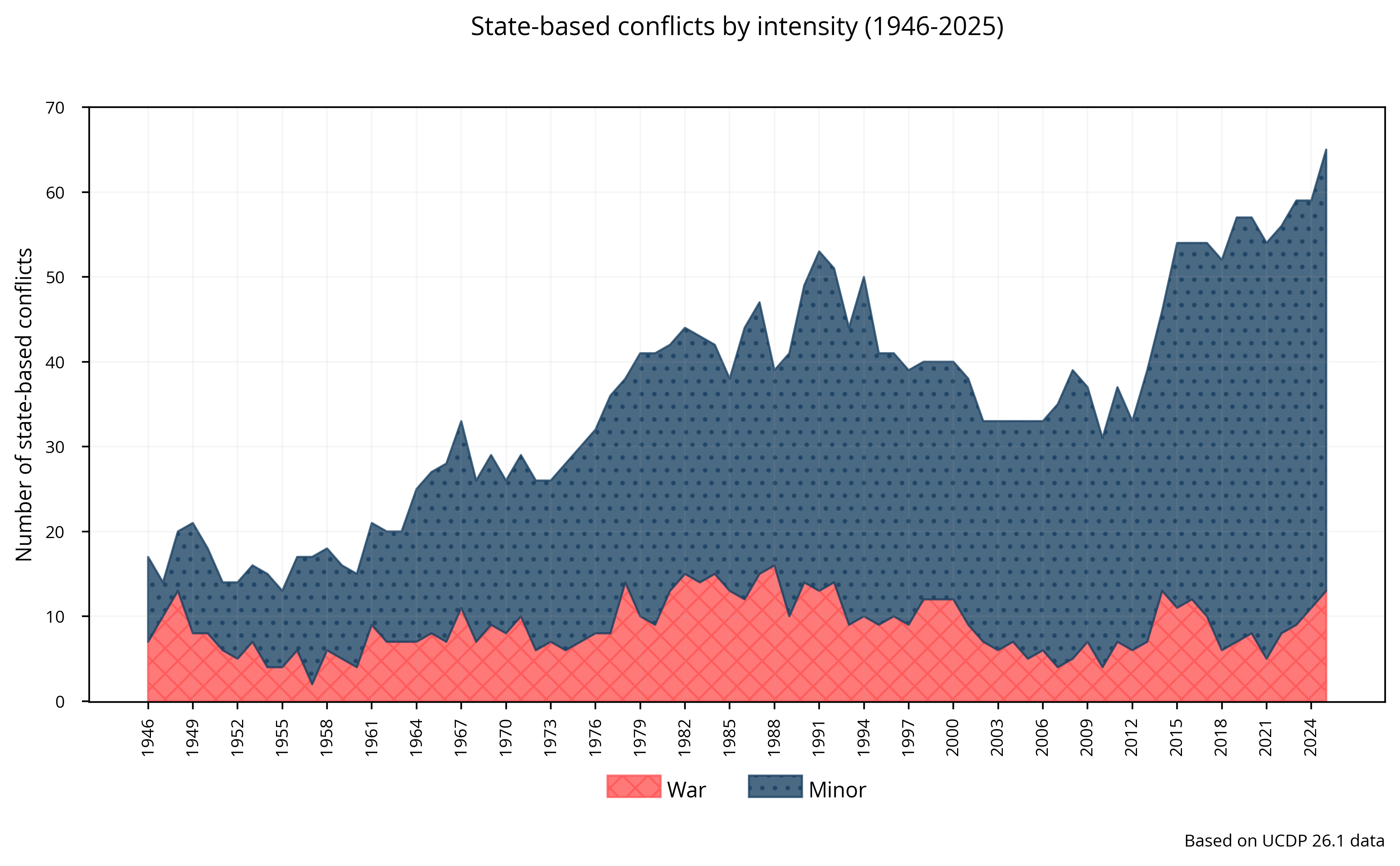

This seems kind of a “Lies, damned lies, and statistics” thing to measure. It makes large centralized conflicts (one war between two states where ten million people die) seem a lot less severe in comparison to decentralized conflicts (ten wars between twenty local groups where one million people die in total).
Ehh, depends on the framing. Increases in proxy wars are still a very bad sign even if they’re not the all out global superpowers trying to annihilate each other. Sure, it’s not more deaths, but it is a sign of high instability. The WWII point is also relevant since that’s when the world shifted to using proxy wars, so it’s basically saying we’re going through the greatest instability measured since this metric started being useful.
That’s not what the top graph seems to indicate (the 80s)
Yup. The article SAYS that. Offers nothing to back it up. The graph on that article only goes back to 1975. Not sure what I was supposed to learn here.
Says nothing about world war 2. Or anything before 1988, which was my whole point. You’re just posting links without addressing what I’m saying.
look again
No, even text search has nothing. I’m done. This title is just unsupported bullshit, that’s straight up contradicted by the data given.
They’re right
That’s the result of spending trillions in war every year, if you prepare for war that’s what you get.
If my neighbor keeps waking me up at 5:30am there’s gonna be another one. /s of course