

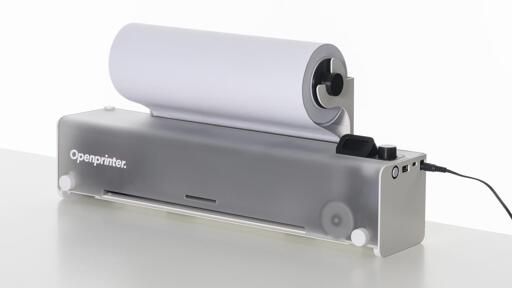
The OpenPrinter project (see the CrowdSupply project’s page) aims to create an open source repairable printer. It has some interesting features.
I was starting to believe the project was dead but they gave some news on their progress today : https://www.crowdsupply.com/open-tools/open-printer/updates/progress-update-and-details-about-our-nomination-for-a-french-design-award.
I post it here since the project is lead by french people and would be an alternative to many printer manufacturer.
The printheads clog, and you need a purge function that wastes so much ink, and doesn’t always work.
Laser printers are so much better, but I doubt there’s any way to make and open version of one, they’re too complicated. I had an old Samsung laser printer that worked fine, except I couldn’t get cartridges for it anymore. So, it became trash.
It’s pretty rare that I want to print anything, but when I do, it would be very helpful to have a printer.
Where I live there is a print shop that I can send things too. The per page cost is high, but I print so rarely it is still cheaper that owning my own printer. (I have a printer because other family members exist and between all of us. Plus it is easier then going to their office during business hours). I use them once in a while anyway though because they have large format printers which is sometimes needed.
I really like this idea. The world would be so much better if we shared resources. Unfortunately I’ve found that most of the few things that I need to print are pretty sensitive. For me that means publicly accessible print shops aren’t really an option. YMMV.
Doesn’t it depend on how much the ink actually costs though? If you can buy it by the gallon for pennies it doesn’t really matter that much.
I wonder how much cheaper ink could be made.
The problem is the damage the ink does to the printer. Doesn’t matter how cheap the ink is when the printer longer works because you put ink in it*
*3 years ago
You know what? You might actually be right about that!
What is so complicated about it? From what I understand, a laser (de)ionizes a big drum to put the image on it. The (de)ionized roller either picks up or doesn’t pick up toner. The toner deposits on the paper in exactly the same pattern it was picked up. A hot roller then fuses it on. If open source machines can 3d print with plastic and resin and UV light and high temperatures accurately enough to create physical objects, I don’t see why it should be any fundamental trouble to have some system capable of moving a laser across a 2d plane/roller with either optics or mechanically, and aside from whatever material they use on that image drum, all the parts are just simple rollers and heaters and high voltage, which are essentially jellybean parts at this point, even toner cartridges and rollers are essentially commodity items. Optics would be better if you want it fast and accurate, I suppose, but there’s no particularly complex magic and nothing top-secret that would be difficult to develop as far as I know. An open source one will probably be slow and clunky and maybe imprecise and power-hungry, but speed and efficiency and precision are not magic and are not fundamentally required for the principles of operation, it’s something you can improve over time.
I feel like it shouldn’t be impossible to reverse engineer and make a FOSS firmware for laser printers. The number of platforms and chipsets used should be somewhat limited.
But then again I know fuck about shit when it comes to writing firmware.
Any one perhaps but lasers are decades old and so we are talking hundreds of different chipsets as things go obsolete. Maybe thousands. Manufacturers don’t say what chipset your printer has and may not change the model number if the replacement has the same features.