

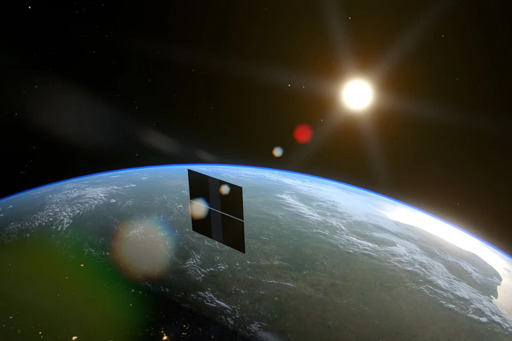
It’s such a hilariously dumb idea I hope the tech bros sink millions into it.
Lets make a data center we can’t maintain, upgrade or access for any practical reason. Waiting for the suggestions to put them in geostationary orbits so that way their latency is even higher but going to struggle staying powered when in Earth’s shadow. Or get put in the Earth-Sun L1 so they always have solar power but now have to have significant more radiators on top of even MORE latency beyond beyond the moon’s orbit.
It makes sense if we have a space elevator and also invert the way most of the physics of data centers work.
The “good idea” isn’t the data centers but the stock pumping. You propose something insanely difficult and expensive (also hopelessly impractical and stupid in this case) and because it is so difficult and expensive you claim you can monopolize the market if you succeed which is the ultimate dream of every capitalist but you just need some insane amount of investment to get there. Then when the money runs out you go back and ask for more and exploit sunk cost fallacy. All the while valuations increasing. It is an amazing way for already rich scammers to get much, much richer than could happen in a sane economy and slurp up huge amounts of capital that otherwise could have gone into more productive endeavors.
Obviously in any well regulated economic system this shit would be subject to some proper oversight to protect the interests of the majority, particularly all the people whose pensions and livelihoods are at risk when this all goes to shit.
Space Nuttery is a mental illness.
I had a conversation with a colleague of mine about this. He believed that Musk’s decision to merge xAI and SpaceX was truly because of the potential of datacenters in space. I was unable to convince him that the logistics of this would be a nightmare and that this was just a way to make the Twitter buyout SpaceX’s problem.
Just billionaire psychosis like where ai got to where it is to begin with. Obviously they’re all visionaries leading the world to a better place…
I don’t know how that even got past the brainfart stage. AFAIK nobody has actually demonstrated how that would really work.
- Despite SpaceX’s advancements in regards to things like resutable rockets, shooting stuff into space is still prohibitively expensive.
- Server clusters are exceptionally heavy.
- Server clusters run hot, cooling is not a triviality considering you can’t just rely on convection in space, so more mass for alternative solutions.
- Datacenters need regular maintenace.
- Logic boards won’t do well with the radiation in space.
- Despite SpaceX’s advancements in regards to things like sattelite internet, getting large datacenter level quantities of data from earth into space and back, and at low latency, is no triviality.
Not saying this won’t ever be a thing. But not in the lifetime of anybody on earth right now I don’t think.
People don’t understand just how difficult it is to cool stuff in space. Half of the shit sticking out of the ISS that people think are solar panels are actually radiant cooling systems, and the ISS will generate WAY less heat per volume than a data center.
Not to mention the power requirements would likely require more than solar unless they put solar panels up far bigger than anything put up there before.
Beyond the power requirements for the computer, there is also the power that will be needed to transmit back to earth.
A wireless link that can pass the amount of bandwidth needed (and do it reliably) will need huge power as well.
It will be far bigger. Its mostly solar panels.
Or one of those mini nuclear reactors they are working on
If we did make something like that, could you even put it on a disposable dish meant to burn up in the atmosphere after 5ish years? There’s already uncertainty about all the dishes burning up and long term impacts, but a mini nuclear reactor?
Im seeing the ISS needs to reject 70kw with a max ability of 84kw. The datacenter dishes will be between 125 and 150, so around double or less.
getting large datacenter level quantities of data from earth into space and back, and at low latency, is no triviality.
Latency is a huge issue, but so is bandwidth.
Land based data centers will have multiple hundred gig (and faster) fiber connections to the outside world.
Replicating that level of bandwidth on wireless links to a satellite in any sort of stable way is (as you said) no triviality. I would even classify it as near impossible.
There is an unsolvable compute problem. The average PC on earth has multiple bit-flips a year from cosmic rays. The space hardened chips we use are 50nm and the chips used from inference are 4 to 6nm. 50nm is far more cosmic ray resistant than 6nm because of the transistor size. Are we supposed to think making H100s with a 65nm process is possible? The speed of light creates a die size limitation as well.
Either that or they’d have to triplicate everything and have a voting system.
this is the current real solution on the ISS - three main computers doing everything.
They are not using 6nm process chips in the ISS. The computers themselves were made before that process existed. An off-the-shelf space hardened computer system uses 65nm process. Cosmic rays is a very general term, it covers basically everything that flies around in space, that includes sources like the sun, which is hammering everything in the solar system with rays. Outside of the atomsphere there are so many more cosmic rays that non-space hardened computers can not even make calculations. Combined with the difference between the bit flip rate when you make transistors 10 x smaller is also fucked up high. One CPU cycle will have enough erros to make the computer useless. It’s a multi-faceted problem and when the largest limiting factor is weight & size, it can’t be solved with scaling.
How would that even work with inference where the expected output will be different between 3 runs with the same input?
The way I see it is they are doing inference, not transfiring bank account balances. I’d be curious to see some actual experimental data, but I’d expect LLMs to skip past bit flips same way you shrug and move on from spelling errors. At worst you can do your critical calculation in triplicate on your 6nm nodes (with redo upon dissensus) and reduce your bit error from 4/year (or 4000/year or whatever have you in orbit) to (4/year)^3
A bit flip might change a 0 to a 1 or a 1 to an infinity. Even if you could just do everything three times, that triples the hardware and energy costs compared to terrestrial computing.
I don’t think you don’t understand the difference between the amout of cosmic rays, which are basically any flying particle, on Earth compared to space. Small nodes would be dealing with multiple per cpu cycle. Multiple could be 1 million a second, I am trying to figure out a way to measure. It would be something like distance from atomsphere(rate of total particles) x probably of an object the size of a transitior getting hit(rate of collions). I could probably find the bit-flip rate for an off-the-shelf space resistant chip and infere the rate for the size I need, but there are other factors. A bit will not flip on every collision, shrinking transistors exponentially increases this.
There are not 1 million bit flips per cpu per second. They let you take your iphone on the ISS now.
LEO is still protected by the atomsphere and magnetosphere fully. Geostationary orbits start to have issues.
Not saying this won’t ever be a thing.
I’m saying it
This whole idea reminds me of the “putting solar panels on highways” idea that keeps popping up from time to time. Anyone who has ever built anything understands how stupid it is. Even if you could do it, it still wouldn’t make sense over just putting solar panels next to highways.
That, and solar windows.
Making an expensive solar panel that lets most of the energy pass through it, and is not mounted in a way to effectively collect solar energy, is a terrible idea.
I agree, that this is at the moment not a viable thing and especially the SpaceX “concept” is complete bullshit.
I do not agree with some of your points, since they are solved/irrelevant (e.g. “regular maintenance”, “low latency”) or could be overcome with reasonable tech advances (e.g. “rockets prohibitively expensive”, “radiation shielding”).
Let me steelman the argument a bit with this single bit of - sadly forgotten - “super cool and innovative tech”: “Underwater data center”, like project Natick (Microsoft) or the Chinese project:
Soooooo, if we will ever see something other than our current land based data centers, we will see millions of ocean data centers, before we will ever see a single commercial space data center.
Reasons:
- Delivery is super cheap (in comparison to space) at scale, thanks to the already existing wind farm infrastructure
- Weight is not an issue
- Cooling is solved
- Maintenance is not necessary, but replacement is. Easy on scale, because modular.
- No radiation shielding necessary
- Connection: data cable = no extra lag or quantity limit
Oh, and by the way, it is still not clear if even ocean data center will be viable. Just found this 😂
They’ll manufacture it on the moon ofc. We won’t ship it from earth.
Orbital data center plan:
Step 1: Establish a slave labor force and advanced chip fabrication facility on the moon.
Unless it becomes cheaper than having a datacenter on earth per quanity of compute, it won’t happen in any meaningful scale even if these issues are solved.
What about the latency hit getting data back to earth?
LEO isn’t that far away. StarLink has quite good latency.
Whatever the end latency is, it’ll be higher than starlink as these are going to be in a sun synchronous orbit and they dont talk to earth, they talk via starlink.
So you’ll have to go up to starlink, then laser link the shortest route to the nearest available dish, then back.
Heh yeah you’d get daily latency variation.
Made me think of this, dish is far away right now! Obviously not that slow, but still haha.

You’d have to constantly adjust its orbit. Something that huge with massive radiators and solar panels is going to get a lot of drag.
1000km is still considered LEO and would take hundreds of years to decay. At this distance, you’d add 3ms of latency, which isn’t nothing but acceptable for most applications.
It will never be an economic thing. Only unpluggable skynet military thing. The weight is not an issue. though. It’s volume.
Weight is always the issue with lifting stuff into space. Volume might merely be an additional issue.
The $200/kg launch price target is based on 150 ton capacity. That’s a $30m launch costs target. Volume/foldability matters the most because that is the actual constraint that limits datacenter launch to a single NVL72 size.
Projected cost targets from SpaceX, especially for Starship are only losely related to reality. Weight is what determines the minimal required energy input to lift something into orbit. Independently from SpaceX number magic. Volume, like I said, can be an additional bottleneck but never undo the above.
most of the fuel weight required is to lift the rest of the fuel. Fuel costs is about $1m for full load. Rest of cost is huge staff, maintenance, and capital cost of rocket.
Starship is huge. I dont know how tightly they can fold these expected dishes, but by weight, they can amd will do 60 starlink v3, and itd be 50 datacenter dishes equivalent. How many they can actually launch is going to depend on how well the solar and radiator folds down, so it might be a volume issue vs weight where they cant launch with the max weight capabilities of the ship.
The datacenters are only a little bigger than a v3 starlink. It’s 1 rack of compute, around 125kw avg 150kw peak. The biggest part is the solar array.
If it’s one rack it’s kinda pointless? And also absurdly more expensive than putting that one rack almost anywhere else in the world. And you can’t really fix or upgrade it. And then it’s in space and more susceptible to bit flips.
I’m not sure there’s a single thing it being in space does that’s better than it not being in space.
One rack is generally going to be well more than enough for a persons inference needs.
They want to put a million of these up there long term, where are you going to find space for a million individual racks? Now it’s a large datacenter again.
I did see one thing about a company adding a cluster or something to someones house and giving them a cut of it. That decentralizes the power distribution, and space requirement, but it adds other problems like vandalism / theft as how well can you protect a thing tacked onto the side of a house worth 10s of thousands of dollars.
Edit: And you don’t fix or upgrade them, they deorbit in ~5 years, and get replaced with the next best thing. Radation protection to avoid bit flipping will be a cost issue, but they already have hardened chips that work in space, so I’m not sure how much new technology is needed, and starship can lift a shit ton of weight, so heavy shielding is possibly an extra option?
Edit2: Just to be clear, I’m not trying to say they are going to earn enough revenue to make these things profitable like they did with Starlink, I’m just talking about the technical specs of what they say they’re going to do. There’s a lot of misconceptions about what they even intend to try putting up there.
Large data centres are used for a reason, it’s way more efficient to shove all the compute in one large building than putting it in space, at all.
Its a horrifically stupid idea, with no real benefit at absurd cost.
It’s not no real benefit, these are some, which are legitimate benefits.
- Unlimited sun, without the sun having to go through the atmosphere which increases the efficiency of the solar panel.
- No opposition / red tape from communities fighting against the data centers, some communities are evening banning them.
- No theft or vandalism.
Just to restate my relevant edit you probably didn’t see above
I’m not trying to say they are going to earn enough revenue to make these things profitable like they did with Starlink, I’m just talking about the technical specs of what they say they’re going to do. There’s a lot of misconceptions about what they even intend to try putting up there.
You can get more power from solar on the ground, cheaper, because it isn’t in space and they’ll get deorbited which is worse than vandalism because the entire thing is now gone.
I’m not disagreeing and saying they won’t do it, I’m just saying it’s an incredibly stupid idea.
That just increases the land space required though which makes it harder to get it built upfront, but I agree, land based solar, even taking 3x+ the land required + battery backup is probably still cheaper given they’ll last 20 years or more.
Ground projects like that take years to complete as well, between finding a spot, permitting, building it etc and to some extent time is money in this current environment.
Weight wise, they can launch 50 AI datacenters per launch with Starships 100T capacity, but volumetric wise I don’t know how well they can fold these up and if they’ll actually reach 50, but lets say they can get 50. I honestly have no idea if they can.
That’s 7.5MW of solar panels deployed each launch which will be coming off a factory line launching multiple times a week. They did 123 starlink launches in 2025, so thats 922.5MW solar capacity launched in a year if they did that with the AI sats, but they’ll likely do way more if starship actually works.
You can’t build an almost 1GW solar array (edit and datacenter) on land that quickly. (edit2: Oops I didn’t do the 3x+ for the 1GW solar i mentioned above, it would need to be 4-5GW on land so it can overproduce to store enough in the batteries for overnight)
The downside of course is it’s only going to last 5-10 years. That’s a lot of costs to try to recoup in that time frame.
You would need staff living up there to support them. Robotics isn’t up to it.
You think they have people repairing and doing maintenance on starlink?
I skimmed the title for a sec and thought “what’s wrong with orbital stations?” before realizing the utter stupidity that graced my vision.
If and only if someone is insane enough to develop off-planet manufacturing with the bulk of the raw materials originating from somewhere in deep space, e.g. asteroid mining, putting data centers in space might be useful for problems that demand intensive compute and can work with extreme latency.
Then again that’s like saying inventing the airplane would have been a good strategy for Neanderthals to find better firewood.
Imagine launching that scale of infrastructure, loaded full of Nvidia chips that’ll be outdated in like 2 years.
At medium earth orbit the minimum delay will be about 67ms (250 ms to 600+ ms for geostationary orbits) for LEO it is 25-50 ms. The average ground network ping on a good day is 1ms-20ms.
Anybody Who Thinks Orbital Data Centers are a Good Idea
Is Suffering from AI Psychosis, Experts ArgueDoesn’t Understand Basic PhysicsTwo main problems with data centers. Power and cooling. In space the power is doable. The cooling is a major pain in the ass and always has been. There are only three ways to get rid of heat. Conduction, convection, and radiation. The first two don’t work because of the vacuum thing. The third is horribly inefficient. Just look at the ISS and the giant fins that only dumps about 70 kW of waste heat through radiator “wings” that weigh several tons. A single rack in a high density compute rack can generate 100kW by itself.
So yeah given the expensive and how inefficient it is, it’s a terrible idea.
Edit: I’m a system architect so dealing with data center heat is something I’m familiar with.
You’re just too small minded to comprehend the grand vision of business genius™ Elon Musk!
And Bezos apparently…
These chucklefucks are just trying to get some sucker… er I mean investor to fund the whole thing so their respective space companies can do the job.
And after doing to some very cursorary research other issues like…
- Radiation and reliability - apparently cosmic radiation is a bitch
- Lifecycle costs - I should have thought about this one. It’s not like when a drive dies in space you just drive down to the DC to replace it. And not mention we recycle out compute about every 5-6 years or so.
- Connection - somebody mention this already in the thread but yeah you ain’t hanging a fiber cable to a satellite
Cant you see, were just around the corner for AI Humanoid Robots in FullSelfDriving™ Teslas heading towards their data center job in space
/s
There’s also the very real problem of data transfer.
On land you just lay down another fiber optic cable and you can double your data transfer rate.
In space, you have to deal with cross talk and interference on a limited spectrum.
Free space laser communications are possible, but even then you are only talking about 10s of GB/s, and you cant add more lasers or receivers on a satellite already in orbit.
But if you have a constellation of thousands of LEO communications satellites to leverage…
Doesn’t help, your laser (or RF comms if you are using them) can still only send out a fixed amount of data per second, it doesnt matter if it is being sent to the ground or another satellite, once it is launched there is a hard cap on how much data can flow into/out of it in a given time and there is no way to improve that.
That’s what the lasers are for. It’s a solved problem.
Not really, because it can’t be solved, just worked around.
Lasers are still subject to the inverse square law, but with a slightly different multiplier.
Also, lasers still have the bandwidth issue of not being able to double up the communication lines due to cross talk and other fun physics issues.
There’s a reason why fiber will never go out of style.
If it was a solved problem it would be widely used, but it isn’t. Ever looked at the reports of starlink speeds? It’s not reliable at all, everything other than a fully clear sky with cold weather (meaning less moisture and particles in the air) affects the communication. It physically can’t be a good or better alternative to fiber (or anything else that isn’t wireless).
Yeah… Terrestrial 5G towers with a fiber backbone for some proportion of them… are… stupendously more cost effective at getting a decent level of internet to a lot of people.
Also doesn’t cause Kessler Syndrome, which is, you know, good.
Now, such a system will still suffer in more abberant atmospheric conditons, but to a far lesser extent.
Literally the only actual ‘use case’ I can think of where StarLink ‘makes sense’ as a better solution is … you are a boat that is actually moving most of the time.
If you’re a house boat… terrestrial 5G probably exists near your mooring.
Either that or you truly, truly live far away from civilization.
… but we already had satellite internet that did those things.
Agreed on the downlink.
I thought this was about the node to node communications. Blue origin and probably others are also using it for in orbit communication.
Other than the fact that the speed of light is a non negotiable constant.
iirc the power is not very doable, You’d need hundreds of times as many solar pannels as are on the ISS to power a single modest data centre.
And at that point wouldn’t the solar panels act as a sail and fuck with the data centers orbit?
Solar sail effect is going to be dwarfed by regular atmospheric drag in low earth orbit. At perfect right angles the radiation pressure on the panels is 4.5 micro-Pascals. Meanwhile, in low orbit there’s enough residual atmosphere to generate a dynamic pressure (for drag) of 5 milli-Pascals, give or take (and strongly depending on the space weather).
So atmospheric drag is around 1000 times more than photon pressure. And the drag is big enough to be noticeable over weeks and months, requiring regular boosts to stay in orbit.
Maybe? Probably? For all I know, a solar-sail effect might help it stay in orbit.
What if we run a really long tube down to earth to send water back and forth? You gotta think like Elon to be innovative.
Send it to a cold moon like Europa. Free cooling, plus A.I. is kept at a safe distance
Ummm….
“All these worlds are yours except Europa. Attempt no landing there.” - Arthur C. Clarke 2010
Even better, the A.I. problem is solved. Hooray!
“give me a recipe for dinner”
…
…
…
(2 hours later for signal round-trip)
“Here you go:…”
Well of course, first you invent the ansible.
Basically they’d need about as much in radiator fin surface area as they would have in solar panel area. The ISS has 8 solar array wings, 35m x 12m, that can produce about 30 kW each, or 240 kW total, in sunlight (which is only half the time). The ISS has a complex cooling system, but relies on 4 radiators about 3.1 m x 13.6 m to reject up to 14 kW of heat each (56 kW total) for cooling the solar arrays themselves. The main cooling system uses 6 radiators, each 23.3 m x 3.4 m, to reject 70 kW of heat (from this report it sounds like each radiator may be capable of rejecting more than 1/6 of the heat but that the system as a whole needs to be kept under 70 kW of heat rejection).
So that seems like about 650 square meters of radiators can provide about 120 kW of heat rejection.
Today, a 72-GPU Blackwell server is 130 kW in a single server rack. The next generation rolling out now has 72 Rubin GPUs in a 230 kW server, in a single rack. And that’s not even a “data center.” That’s just a single (albeit very powerful) server. How many can you string together, with networking equipment beaming data connections back down to the ground, before the ratio of solar panels and radiators to the actual ship size becomes unworkable?
That said, it’s technically possible, especially if you can radiate the heat at higher temperatures than the ISS does, as the Stefan-Boltzmann law shows that the hotter the radiator, the more heat it can reject. Just completely infeasible from an engineering and economical standpoint, for any data center that hopes to be relevant in an age of 100+ MW data centers.
All they’re sending up is 1 server rack. 125kw avg, 150kw peak.
Radiator needs to be ~twice as big as ISS, but we probably have improved their efficiency in recent years so maybe not twice?
Yeah but space is cold. Just put the hotness out into space and it’ll freeze just like in the movies.
/s
Question
With space being so cold, doesn’t that keep temps low? How does it all work
Space really isn’t cold. Temperature is a measure of how fast particles (atoms, molecules) are moving.
In a perfect vacuum with no particles at all, you literally couldn’t define a temperature, because there’s nothing around to jiggle
In order to understand why space is “cold”, you have to understand how we, as humans, perceive temperature. What we feel as hotness or coldness is just how excited the molecules in the atmosphere are. Molecules very excited? It’s hot. Molecules very still? Cold.
Space is vast. Incomprehensible to our puny human minds that have evolved to exist on this tiny mote of dust. Most of space is devoid of matter. Sure there’s hydrogen and helium out there just floating around, but not enough of it for us to be able to feel. So space feels like cold, and indeed, is quite cold. But as the above poster explained, losing heat in space is fundamentally different than how we lose it on earth.
Your body generates heat to keep your squishy organs running smoothly. The way we prevent ourselves from overheating is we rely on perspiration and evaporation, but that only works if we have Earth-like conditions where airflow can carry that excess heat way from our bodies.
In space, there is no airflow. Your skin would freeze while your blood boils.
The same issue is present with our technology. Radiating heat is very, very inefficient in space because we need something to carry it away from the source that is generating it faster than it can generate it. At least with the tech, we can turn it off to let it cool slowly over time, but it doesn’t solve the fundamental problem of having no way to efficiently cool an entire AI datacenter that is meant to be used to fill a continuous demand here on Earth.
I actually understand that. Thank you a detailed thoughtful reply
Do you have a podcast? I saw a podcast clip on tiktok saying almost verbatim the same thing
Not to my knowledge. But I assume this is nothing new and any reasonable person could come up with the same thing. I did google the ISS thing so that part may have come from there.
they are trying ti in the ocean, they have to deal with corrosion , animals gettin encrusted on the surfaces, plus transportation and logistics.
It would also be extremely vulnerable to rockets.
The radiators would be about the same size as the solar panels. Both would have to be huge to run a rack full of GPUs.
Radiators work because they have something to radiate heat into. Space is famously empty, so a radiator the size of a planet would only work as a heat sink until the total heat in the system was high enough to make everything glow like a heating element, at which point you dump waste energy as visible light.
You can radiate heat into the vacuum of space, it’s just extremely slow compared to doing it into atmosphere. Vacuum is not a perfect insulator in this regard.
Think of it this way, if a vacuum was a perfect insulator, how would the sun radiate heat to Earth?
Your car radiator is actually using convection to convect heat into the air.
The spacecraft radiators use radiation to dump heat by emitting infrared photons. Photons do not require a medium. This type of radiator works by maximizing the area of hot surface exposed to empty space (which has an effective temperature of 3 K). They have to be pointed into a dark area and away from the sun. There’s no advantage to fins, because you want to maximize area perpendicular to the dark sky.
Both devices are called radiators, but they are different kinds of devices.
The radiators dissipate the heat as infrared radiation. They work as long as they are pointed away from the sun or earth.
If they couldn’t get rid of the heat, there would be no satellites or space stations.
The solution, then, is a downsized dc.
I betcha it’s not about economic or computational efficiency, it’s about politics. They’re data centers outside of any national borders, perfect for data laundering. It’s leverage for corporations to transcend sovereign borders.
I mean, yes, but specifying a more specific cause of the delusional thinking is useful.
Do we have a way to transfer heat into rock, because I’m thinking lunar data centers.
deleted by creator
There recently was a report on Channel 4 about an American Bitcoin psycho gathering in Vegas where people framed the tech as unter interplanetary payment system. Someone explain them bandwidth please.