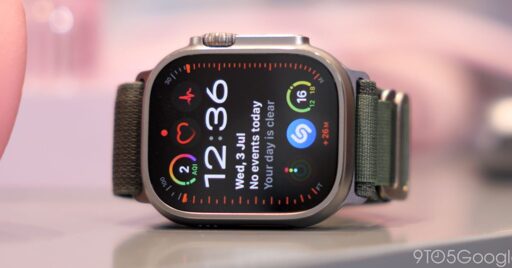
The European Commission has revised its battery regulations to exempt devices such as the Apple Watch from requirements that batteries be removable and replaceable by users.
I’m not going to disagree with you on the e-waste issue. I think every effort should be made to reduce e-waste, and smart watches are definitely e-waste.
I’m saying the uncomfortable truth is that smart watches currently have the following constraint. User-replaceable battery, acceptable size and water resistance, smart watch features; you can pick two. I’m not saying that’s okay, I’m saying that’s physics.
Proof that quartz watches cannot reasonably do it has no bearing on if smart watches can. Quartz watches don’t have a screen, they don’y have smart watch features (radios, etc). A battery in a quartz watch is a fraction of the power capacity of that in a smart watch. Hell, the entire movement of a quartz watch is smaller than just the battery in a smart watch. You cannot compare the two.
You can make the argument that smart watches should have user replaceable batteries. I agree they should. You can think that we can accomplish all three things I mentioned above now, and while I think that’s a nice goal, I don’t think we are there yet.
Proof that user replaceable is not currently feasible? The batteries in the Apple Watch aren’t even Apple replaceable; if you get a battery “replacement”, they send you a new watch. One would hope Apple recycles the old watches in a responsible manner.
I agree with what you say in all but the last paragraph. Apple is no proof. The reason why they replace the whole watch is because its cheaper to do that rather than pay a technician to do the swap. We have all technologies needed to make it work, but its currently cheaper not to. If there is a legislation, suddenly the companies will be forced to make the battery swaps cheaper. Without it, there is no incentive for company like Apple, products of which people will keep buying no matter what.
User-replaceable battery, acceptable size and water resistance, smart watch features; you can pick two. I’m not saying that’s okay, I’m saying that’s physics.
How is that physics?
LG G Watch R had all three. I doubt LG can bend the laws of physics.
I did swim with my previous phone multiple times. There is no reason not to. Until my screen was cracked and I didn’t realize it until it was too late (tiny fracture). There is no reason to fear swimming with IP68 (most phones are actually rated for > than 1m) rated phones unless front or back is cracked.


I’m not going to disagree with you on the e-waste issue. I think every effort should be made to reduce e-waste, and smart watches are definitely e-waste.
I’m saying the uncomfortable truth is that smart watches currently have the following constraint. User-replaceable battery, acceptable size and water resistance, smart watch features; you can pick two. I’m not saying that’s okay, I’m saying that’s physics.
Proof that quartz watches cannot reasonably do it has no bearing on if smart watches can. Quartz watches don’t have a screen, they don’y have smart watch features (radios, etc). A battery in a quartz watch is a fraction of the power capacity of that in a smart watch. Hell, the entire movement of a quartz watch is smaller than just the battery in a smart watch. You cannot compare the two.
You can make the argument that smart watches should have user replaceable batteries. I agree they should. You can think that we can accomplish all three things I mentioned above now, and while I think that’s a nice goal, I don’t think we are there yet.
Proof that user replaceable is not currently feasible? The batteries in the Apple Watch aren’t even Apple replaceable; if you get a battery “replacement”, they send you a new watch. One would hope Apple recycles the old watches in a responsible manner.
I agree with what you say in all but the last paragraph. Apple is no proof. The reason why they replace the whole watch is because its cheaper to do that rather than pay a technician to do the swap. We have all technologies needed to make it work, but its currently cheaper not to. If there is a legislation, suddenly the companies will be forced to make the battery swaps cheaper. Without it, there is no incentive for company like Apple, products of which people will keep buying no matter what.
How is that physics?
LG G Watch R had all three. I doubt LG can bend the laws of physics.
Quick side question, would you go swimming with your phone in your pocket? Your answer (and mine) is probably not, right?
The LG G Watch R had a rating of IP67, which is less waterproof than current phones. That is to say, no, it’s not effectively waterproof.
I did swim with my previous phone multiple times. There is no reason not to. Until my screen was cracked and I didn’t realize it until it was too late (tiny fracture). There is no reason to fear swimming with IP68 (most phones are actually rated for > than 1m) rated phones unless front or back is cracked.