It’s not even actually a truck. It’s a ute. Like the Hyundai Santa Cruz. It’s a car (unibody) with a bed.
I don’t dislike utes at all, and even have an old one I am restoring, but it is not a truck.
An electric pickup isn’t a no-brainer for the US market. It’s a big-brainer.
Most EVs are shaped like running shoes for aerodynamics. Pickup trucks are big air smacking slabs. Larger pickup trucks advertise towing capacity as a major feature, EVs are bad at towing, again because of aerodynamics. The additional batteries and such required to make an EV pickup work are large, heavy and expensive. I think the technology needs to cook a bit before we get there.
Now on the compact pickup truck front…those are basically extinct. The Slate is almost a good attempt, the problem is it’s almost the anti-cybertruck. The Cybertruck is what you get when a billionaire nazi notices how thoroughly the drugs have emptied his scrotum. It’s the costume a truly awful male wears to cosplay as a man. The Slate is almost the equal and opposite, it’s what r/fuckcars thinks of when they start a sentence with “Can’t you just make do with…” A 20 year old S10 kicks the Slate’s ass in every way because the Slate is designed mostly to play dress-up like a barbie doll. They’re taking pre-orders but they won’t show you where the tie down points in the bed are.
Gas trucks suck fuel when towing too. It’s the nature of the task. The question mostly imo is - are you towing long distances? (well are you going long distances is a big EV question generally). If you’re towing stuff back from the hardware store then EV is fine for towing. If you’re doing some sort of small hauling job going hundreds of miles then not so much.
Where I end up is - how often generally are you towing? If it’s 2x a year or less - rent a truck and otherwise save craptons of money. I know - I have wasted 10k splitting a 2003 f250 with my sister to get a tractor home “and we would need to tow stuff semi regularly and renting from Enterprise was a PITA”. Yea sure - we used it for towing twice. Finally managed to sell it.
I think we tow more on a 8x10 landscape trailer for bringing lumber home etc and tow with my Outback and now Pilot than we tow with the 1500 we have for “bigger stuff”.
Though maybe that’s because we sort of stopped going to farm auctions…
The folks who really care about tow ratings and range are those who have boats or campers. Which means they do road trips while towing. Do you want to tow a camper on a road trip in a rented vehicle?
Yes, gas trucks also suffer poorer fuel economy when towing. It’s less of a practical problem because it means more 10 minute fuel stops. With an EV, it means more 3 hour fuel stops. It’s fairly easy to equip a gas truck with a larger or additional fuel tank. My S10’s fuel tank is on the left side of the bed; it would be fairly trivial to mount another tank on the right side, or, a Blazer’s fuel tank isn’t that hard to install behind the axle where the pickup hangs its spare tire. Doubling or tripling a pickup truck’s range is something a guy can do at his house. It’s functionally impossible with an EV.
The Slate is almost the equal and opposite, it’s what r/fuckcars thinks of when they start a sentence with “Can’t you just make do with…” A 20 year old S10 kicks the Slate’s ass in every way because the Slate is designed mostly to play dress-up like a barbie doll. They’re taking pre-orders but they won’t show you where the tie down points in the bed are.
Speaking as a mod of !fuckcars and the owner of a 30-year-old Ford Ranger, I want a Slate truck and I don’t think my current truck would be able to kick its ass. (Well, aside from off-roading, since the Slate doesn’t have a 4x4 version yet. And, uh, ease of refueling in the wilderness. Hmm.)
Okay, so maybe it wouldn’t be an upgrade in all ways, but IMO those tradeoffs are still worth it because the lack of telemetry and other enshittification means it’s the first modern mass-market electric car (of any type, truck or otherwise) I’ll be willing to own.
My S10 outranges a Slate by over 50%, refuels from empty to full in less than five minutes, seats 4, has a 6 foot bed, tows up to 7600 pounds…a Slate is a massive step back in a lot of ways.
My Ranger seats 3 in a pinch and is rated to tow 1600 pounds (2.3L I4, regular cab, manual, 4x4) so you can see how my perspective is a little different.
If the Slate had a 6 foot bed, VTL capability, and a little more range I’d be really into it. I’m a woodworker, hauling plywood and lumber with a 5 foot bed doesn’t sound fun.
I don’t know enough about physics or cars to really rebut you but this doesn’t seem plausible to me.
I don’t think aerodynamics are particularly relevant to towing? Prime movers (tractor trailers?) are about the least aerodynamic vehicle there is but they regularly tow more than 100 tonnes at highway speed.
If I had to guess I’d suggest the primary problem is the relationship between system weight of the vehicle and load, battery capacity, and the battery’s weight. As in, if you want to be able to cart 1 ton for 200km then the additional battery requirement is another 300kg so that’s really only an extra 700kg so you need more battery and heavier frame and so on.
Another problem I suppose, and I emphasize that this is supposition, is optimising motors for both torque and speed. The torque required to break inertia with lots of weight in sandy or muddy terrain.
The maximum weight for a tractor-trailer rig in the United States is 80,000 pounds, 40 short tons or 36.36 metric tons.
A tractor-trailer rig is surprisingly streamlined. The cab is shaped and sized for the front of the trailer to ride closely in its wake, often with fairings that reach as close to the trailer as practicable. Sure it’s a brick, but it’s ONE brick:
A pickup truck towing a trailer isn’t anywhere near that slick, even with a gooseneck trailer, the trailer is often taller and wider than the cab. It’s a brick, attached to another, larger brick being pulled through the turbulent disturbed air from the first brick:
In terms of torque, EVs have a significant advantage. Electric motors produce a lot more torque at low to zero RPM than internal combustion engines do. Limited slip differentials or all-wheel drive are solved problems.
The additional energy required to accelerate the additional weight up to speed isn’t that much of a problem as an EV will get that back with regenerative braking. Well, some of it. Most trailers have brakes of their own that do help with braking distance but are there mostly to keep the hitch under tension to prevent jackknifing. An ICEV figures on losing all of that energy to friction braking, a BEV plans on recovering some of it. An electric pickup carrying 1000 pounds in the bed will be more efficient than one pulling a 1000 pound trailer, in most cases.
The maximum weight for a tractor-trailer rig in the United States is 80,000 pounds, 40 short tons or 36.36 metric tons.
I’m not sure what you’re getting at with this. Here in Australia road trains haul 90 metric tons of grain and fertilizer all the time, that doesn’t include the weight of the trailers.
Regardless, I’m not quite sure what you’re trying to illustrate - your example of a “streamlined vehicle” undoubtedly consumes a lot more diesel than your example of a vehicle which is not streamlined. Isn’t that antithetical?
In terms of torque, EVs have a significant advantage.
Yes, but a “truck” with a 4 ton towing capacity obviously needs motors with more torque than those on a tesla.
The additional energy required to accelerate the additional weight up to speed isn’t that much of a problem as an EV will get that back with regenerative braking. Well, some of it.
As little as 5 to 10% on the highway, not particularly significant. Installing regenerative brakes on a trailer is a lot of additional cost and complexity.
In the United States, if you need more than about 20 tons of freight moved, you use the railroad not the highway. “Road trains” aren’t a thing here.
Regardless, I’m not quite sure what you’re trying to illustrate - your example of a “streamlined vehicle” undoubtedly consumes a lot more diesel than your example of a vehicle which is not streamlined. Isn’t that antithetical?
In absolute terms, yes. A semi truck consumes more fuel than a pickup truck. So does a diesel locomotive. The point is the difference in aerodynamic drag with and without the trailer.
Aerodynamically, a semi truck is the same shape with and without a trailer. Somewhat streamlined nose, flat sides, flat rear. With the trailer attached, that flat rear is just 50 feet further away. A semi truck without a trailer will make better fuel economy because it doesn’t have to accelerate the additional weight or overcome the friction in the additional axles, but the cab has already taken most of the aerodynamic punishment it can.
With a non-streamlined pickup truck, the additional wheel friction and acceleration energy are factors, but you’re also functionally doing this:
So a pickup truck sees a much bigger punishment to fuel economy when you hitch up a trailer than a semi does.
Yes, but a “truck” with a 4 ton towing capacity obviously needs motors with more torque than those on a tesla.
Not necessarily. My S10’s 4.3L V6 engine makes 200 horsepower and 200 foot pounds of torque. It’s rated to tow 7600 pounds, with the addition of a transmission cooler. A Tesla Model Y is rated at 397 horsepower and 389 foot pounds of torque, it is rated to tow 3500 pounds. A lot more factors than horsepower and torque go into a tow rating. The strength of the frame at the hitch, a height sensing proportioning valve, the duty cycle ratings of the power train to name a few. It’s not about “Can this car get this weight moving” it’s “can this car perform a safe emergency stop 9 hours into a 10 hour journey towing this weight?”
As little as 5 to 10% on the highway, not particularly significant.
See that’s the funny thing about EVs. ICEVs get better fuel economy on the highway because the constant aerodynamic drag at cruising speed is less than all the braking you do in the city. EVs are the other way up, because of regenerative braking they get a lot of their energy back when braking, but you can’t get aerodynamic drag back. And that’s without the additional drag of a trailer.
They very much are, depending on what you’re towing, most of your fuel used goes into overcoming aerodynamic drag. If you tow a load of gravel on a trailer, compared to a caravan of the same weight, the difference in fuel used can be double.
Towing something that’s not very aerodynamic can easily double your fuel use, which means half the range or less in an EV.
I don’t think aerodynamics are particularly relevant to towing?
Aerodynamics are extremely relevant to towing. “Aging Wheels” on Youtube did a test and found that payload weight makes basically no difference at all, but a trailer with bad aerodynamics can cut an electric truck’s range in half.
Yeah the electric pickup is such a no brainer for the US
Disagree. The truck market itself is a no brainer, but electric trucks have design challenges that electric sedans don’t. Namely, aerodynamics, towing, and aerodynamics while towing. It is much harder to make an electric truck capable of doing “truck stuff” with a reasonable range and price compared to making an electric car.
Harder maybe but it’s clearly doable. We have a number of options now. And it’s not like they’ve had to make them hyper-aerodynamic or anything. Just took a little more advanced battery tech.
IIRC, according to Aging Wheels on YouTube, of all the electric trucks, only one (the Chevy Silvarado) actually manages to have decent range while towing.
Correct, but now consider how much time and money has been spent over the decades on making sure that “trucks can do truck stuff” for combustion vs. electric drives. “it’s much harder” is true only in the context that thousands of years of engineering time have already been poured into diesel and gas trucks, and only a tiny fraction of that has yet been dedicated to electric. So it’s not “much harder” it just “hasn’t been funded yet at the level that the oil industry has provided combustion vehicles for nearly 100 years”.
It’s not a technology/research issue; it’s an economics issue. Trucks simply need an absolutely huge battery pack to brute-force not only themselves but a boxy trailer through the air for hundreds of miles, and all but one of them don’t actually have it (even at the very expensive prices they sell for).
Look up the curve of the density of energy storage for batteries the last 20-ish years and then honestly tell me this isn’t a technology issue in the midst of being addressed.


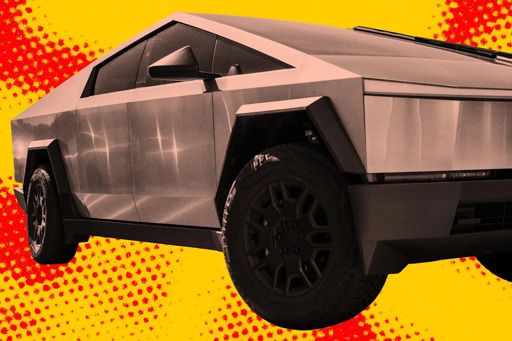
How you fuck up making a truck so badly?
It’s not even actually a truck. It’s a ute. Like the Hyundai Santa Cruz. It’s a car (unibody) with a bed.
I don’t dislike utes at all, and even have an old one I am restoring, but it is not a truck.
Yeah the electric pickup is such a no brainer for the US market and it was one of the first.
But what if it was horribly ugly and made everyone hate you? Surely it will sell even better then!
An electric pickup isn’t a no-brainer for the US market. It’s a big-brainer.
Most EVs are shaped like running shoes for aerodynamics. Pickup trucks are big air smacking slabs. Larger pickup trucks advertise towing capacity as a major feature, EVs are bad at towing, again because of aerodynamics. The additional batteries and such required to make an EV pickup work are large, heavy and expensive. I think the technology needs to cook a bit before we get there.
Now on the compact pickup truck front…those are basically extinct. The Slate is almost a good attempt, the problem is it’s almost the anti-cybertruck. The Cybertruck is what you get when a billionaire nazi notices how thoroughly the drugs have emptied his scrotum. It’s the costume a truly awful male wears to cosplay as a man. The Slate is almost the equal and opposite, it’s what r/fuckcars thinks of when they start a sentence with “Can’t you just make do with…” A 20 year old S10 kicks the Slate’s ass in every way because the Slate is designed mostly to play dress-up like a barbie doll. They’re taking pre-orders but they won’t show you where the tie down points in the bed are.
Gas trucks suck fuel when towing too. It’s the nature of the task. The question mostly imo is - are you towing long distances? (well are you going long distances is a big EV question generally). If you’re towing stuff back from the hardware store then EV is fine for towing. If you’re doing some sort of small hauling job going hundreds of miles then not so much.
Where I end up is - how often generally are you towing? If it’s 2x a year or less - rent a truck and otherwise save craptons of money. I know - I have wasted 10k splitting a 2003 f250 with my sister to get a tractor home “and we would need to tow stuff semi regularly and renting from Enterprise was a PITA”. Yea sure - we used it for towing twice. Finally managed to sell it.
I think we tow more on a 8x10 landscape trailer for bringing lumber home etc and tow with my Outback and now Pilot than we tow with the 1500 we have for “bigger stuff”.
Though maybe that’s because we sort of stopped going to farm auctions…
The folks who really care about tow ratings and range are those who have boats or campers. Which means they do road trips while towing. Do you want to tow a camper on a road trip in a rented vehicle?
Yes, gas trucks also suffer poorer fuel economy when towing. It’s less of a practical problem because it means more 10 minute fuel stops. With an EV, it means more 3 hour fuel stops. It’s fairly easy to equip a gas truck with a larger or additional fuel tank. My S10’s fuel tank is on the left side of the bed; it would be fairly trivial to mount another tank on the right side, or, a Blazer’s fuel tank isn’t that hard to install behind the axle where the pickup hangs its spare tire. Doubling or tripling a pickup truck’s range is something a guy can do at his house. It’s functionally impossible with an EV.
Speaking as a mod of !fuckcars and the owner of a 30-year-old Ford Ranger, I want a Slate truck and I don’t think my current truck would be able to kick its ass. (Well, aside from off-roading, since the Slate doesn’t have a 4x4 version yet. And, uh, ease of refueling in the wilderness. Hmm.)
Okay, so maybe it wouldn’t be an upgrade in all ways, but IMO those tradeoffs are still worth it because the lack of telemetry and other enshittification means it’s the first modern mass-market electric car (of any type, truck or otherwise) I’ll be willing to own.
My S10 outranges a Slate by over 50%, refuels from empty to full in less than five minutes, seats 4, has a 6 foot bed, tows up to 7600 pounds…a Slate is a massive step back in a lot of ways.
My Ranger seats 3 in a pinch and is rated to tow 1600 pounds (2.3L I4, regular cab, manual, 4x4) so you can see how my perspective is a little different.
If the Slate had a 6 foot bed, VTL capability, and a little more range I’d be really into it. I’m a woodworker, hauling plywood and lumber with a 5 foot bed doesn’t sound fun.
I don’t know enough about physics or cars to really rebut you but this doesn’t seem plausible to me.
I don’t think aerodynamics are particularly relevant to towing? Prime movers (tractor trailers?) are about the least aerodynamic vehicle there is but they regularly tow more than 100 tonnes at highway speed.
If I had to guess I’d suggest the primary problem is the relationship between system weight of the vehicle and load, battery capacity, and the battery’s weight. As in, if you want to be able to cart 1 ton for 200km then the additional battery requirement is another 300kg so that’s really only an extra 700kg so you need more battery and heavier frame and so on.
Another problem I suppose, and I emphasize that this is supposition, is optimising motors for both torque and speed. The torque required to break inertia with lots of weight in sandy or muddy terrain.
The maximum weight for a tractor-trailer rig in the United States is 80,000 pounds, 40 short tons or 36.36 metric tons.
A tractor-trailer rig is surprisingly streamlined. The cab is shaped and sized for the front of the trailer to ride closely in its wake, often with fairings that reach as close to the trailer as practicable. Sure it’s a brick, but it’s ONE brick:
A pickup truck towing a trailer isn’t anywhere near that slick, even with a gooseneck trailer, the trailer is often taller and wider than the cab. It’s a brick, attached to another, larger brick being pulled through the turbulent disturbed air from the first brick:
In terms of torque, EVs have a significant advantage. Electric motors produce a lot more torque at low to zero RPM than internal combustion engines do. Limited slip differentials or all-wheel drive are solved problems.
The additional energy required to accelerate the additional weight up to speed isn’t that much of a problem as an EV will get that back with regenerative braking. Well, some of it. Most trailers have brakes of their own that do help with braking distance but are there mostly to keep the hitch under tension to prevent jackknifing. An ICEV figures on losing all of that energy to friction braking, a BEV plans on recovering some of it. An electric pickup carrying 1000 pounds in the bed will be more efficient than one pulling a 1000 pound trailer, in most cases.
I’m not sure what you’re getting at with this. Here in Australia road trains haul 90 metric tons of grain and fertilizer all the time, that doesn’t include the weight of the trailers.
Regardless, I’m not quite sure what you’re trying to illustrate - your example of a “streamlined vehicle” undoubtedly consumes a lot more diesel than your example of a vehicle which is not streamlined. Isn’t that antithetical?
Yes, but a “truck” with a 4 ton towing capacity obviously needs motors with more torque than those on a tesla.
As little as 5 to 10% on the highway, not particularly significant. Installing regenerative brakes on a trailer is a lot of additional cost and complexity.
In the United States, if you need more than about 20 tons of freight moved, you use the railroad not the highway. “Road trains” aren’t a thing here.
In absolute terms, yes. A semi truck consumes more fuel than a pickup truck. So does a diesel locomotive. The point is the difference in aerodynamic drag with and without the trailer.
Aerodynamically, a semi truck is the same shape with and without a trailer. Somewhat streamlined nose, flat sides, flat rear. With the trailer attached, that flat rear is just 50 feet further away. A semi truck without a trailer will make better fuel economy because it doesn’t have to accelerate the additional weight or overcome the friction in the additional axles, but the cab has already taken most of the aerodynamic punishment it can.
With a non-streamlined pickup truck, the additional wheel friction and acceleration energy are factors, but you’re also functionally doing this:
So a pickup truck sees a much bigger punishment to fuel economy when you hitch up a trailer than a semi does.
Not necessarily. My S10’s 4.3L V6 engine makes 200 horsepower and 200 foot pounds of torque. It’s rated to tow 7600 pounds, with the addition of a transmission cooler. A Tesla Model Y is rated at 397 horsepower and 389 foot pounds of torque, it is rated to tow 3500 pounds. A lot more factors than horsepower and torque go into a tow rating. The strength of the frame at the hitch, a height sensing proportioning valve, the duty cycle ratings of the power train to name a few. It’s not about “Can this car get this weight moving” it’s “can this car perform a safe emergency stop 9 hours into a 10 hour journey towing this weight?”
See that’s the funny thing about EVs. ICEVs get better fuel economy on the highway because the constant aerodynamic drag at cruising speed is less than all the braking you do in the city. EVs are the other way up, because of regenerative braking they get a lot of their energy back when braking, but you can’t get aerodynamic drag back. And that’s without the additional drag of a trailer.
They very much are, depending on what you’re towing, most of your fuel used goes into overcoming aerodynamic drag. If you tow a load of gravel on a trailer, compared to a caravan of the same weight, the difference in fuel used can be double.
Towing something that’s not very aerodynamic can easily double your fuel use, which means half the range or less in an EV.
Aerodynamics are extremely relevant to towing. “Aging Wheels” on Youtube did a test and found that payload weight makes basically no difference at all, but a trailer with bad aerodynamics can cut an electric truck’s range in half.
Disagree. The truck market itself is a no brainer, but electric trucks have design challenges that electric sedans don’t. Namely, aerodynamics, towing, and aerodynamics while towing. It is much harder to make an electric truck capable of doing “truck stuff” with a reasonable range and price compared to making an electric car.
Harder maybe but it’s clearly doable. We have a number of options now. And it’s not like they’ve had to make them hyper-aerodynamic or anything. Just took a little more advanced battery tech.
IIRC, according to Aging Wheels on YouTube, of all the electric trucks, only one (the Chevy Silvarado) actually manages to have decent range while towing.
Think it might’ve been in this video? https://www.youtube.com/watch?v=UmKf8smvGsA
I believe Ford has the f150 lightning, an ev version. I don’t know how it’s been doing though.
The all electric version has been cancelled in favor of a hybrid design, but they claim the hybrid has a 700 mile range
https://www.npr.org/2025/12/15/nx-s1-5645147/ford-discontinues-all-electric-f-150-lightning
Thanks for the update
Correct, but now consider how much time and money has been spent over the decades on making sure that “trucks can do truck stuff” for combustion vs. electric drives. “it’s much harder” is true only in the context that thousands of years of engineering time have already been poured into diesel and gas trucks, and only a tiny fraction of that has yet been dedicated to electric. So it’s not “much harder” it just “hasn’t been funded yet at the level that the oil industry has provided combustion vehicles for nearly 100 years”.
It’s not a technology/research issue; it’s an economics issue. Trucks simply need an absolutely huge battery pack to brute-force not only themselves but a boxy trailer through the air for hundreds of miles, and all but one of them don’t actually have it (even at the very expensive prices they sell for).
Look up the curve of the density of energy storage for batteries the last 20-ish years and then honestly tell me this isn’t a technology issue in the midst of being addressed.