

cross-posted from: https://mander.xyz/post/54841619
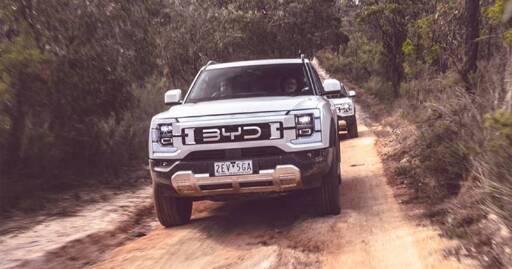
Hyundai has taken aim at its biggest Chinese rival in Australia, with the brand’s local chief sensationally suggesting BYD is dumping cars and losing money, while labelling the auto giant’s stratospheric growth unsustainable.
That’s the word from CEO and President of Hyundai Australia, Don Romano - not just the company’s most senior automotive executive, but also CEO of the brand’s Asia Pacific Regional Headquarters - who did not hold back when asked if he was surprised at how quickly BYD had been able to shoot up the Australian sales charts.
“I think if I were to lose money and dump cars, and if my stock price was down 40 per cent, I could do the same,” he says.
…
"I think there’s a big difference between growth at any cost and growth organically, so I’m not surprised. I would be if it was sustainable.
"We’re celebrating our 40th anniversary and we’re planning another 40 years, so if they’re around in 40 years then hats off to them, but at the rate they’re going right now?
“It’s their strategy, but no, I’m not surprised. I think none of us are. We know what their strategy is, we know why they’re doing what they’re doing, it isn’t the way we would do business, but time will tell.”
It’s a stunning attack from within the industry, with Mr Romano seemingly referring to BYD’s results in China, where, in contrast to Australia, sales have been falling. That appears to be putting downward pressure on BYD’s stock price, which has fallen 36.39 on the Hong Kong exchange over the past 12 months.
…
Mr Romano’s comments seem to suggest that at least some of that growth is being fuelled by selling vehicles here below cost.
Hyundai sales are up a more modest five per cent across the first five months of 2026, though both brands have sold a similar amount of vehicles, with BYD’s approximate 33,000 edging Hyundai’s approximate 32,000.
…
BYD, which maintains a fully-integrated supply chain of Chinese suppliers, has created its own proprietary supply chain finance system called the “D-chain,” through which it issues “e-debt certificates.”
Suppliers can either redeem the certificates upon maturity or transfer them to others within BYD’s supply chain network.
However, such digital instruments are simply bilateral credit agreements between BYD and the supplier.
So how long does it take to get paid? BYD typically follows a net 30 to 60 payment cycle, with the D-chain system adding an additional six to eight months to that period. In practice, that stretches the total payment period to between eight and 10 months.
That approach greatly reduces BYD’s financial pressure, but is to the considerable disadvantage of its suppliers.
This and the system enables BYD to hide ballooning corporate debt are the reasons why the company has reportedly been pressured to abandon its payment system. At the end of last year, BYD has reportedly decided to phase out its payment system, but no details were published.]
…
I love my BYD Dolphin Mini and I think a Hyundai anything would be a downgrade lol
… Isn’t the seagull the cheapest model BYD makes? Hyundai hasn’t even tried to compete in the sub $10k range - pretty much any other model from BYD or Hyundai would be an upgrade over the seagull. If you have reliable access to a charger it’s an excellent choice, but the teeny tiny batteries in those models and the 40kw max charging rate can make it logistically challenging, especially if you live in an apartment without charging accommodation. It’s just about as dirt cheap as it’s possible to make a vehicle without you having to pedal, which is an accomplishment, but lets not be too hyperbolic in our praise here.
(Heck, they’ve removed so many features the ad copy for that model has to celebrate such charming aspects as the vent design, which admittedly does look sorta cool, but… not really helpful in deciding if I want a car or not)
USAmericans, Maybe Australia (never been there) have the most ridiculous needs, in most places on earth this isn’t logistically challenging. My country is designed like shit but I don’t ever need to drive more than 300km in a single day, the US owns that crown of absolutely ridiculous and unmanageable sprawl. can easily go 250 KM and have a quarter charge left over. I live in a house with solar and I installed a charger for the car. When I bring it to my friends house I can plug it in on their wall charger and it makes a significant boost if I was ever worried about getting back, which I never am.
I had a Hyundai gas car about 15 years ago and it was a piece of shit and I would never buy another Hyundai anything.
Who could have possibly predicted that the logistical burden is much less common for people who don’t live in an apartment (me I did, it was me). Goodness. I had clearly never considered such a situation could arise (lies I said exactly that). You have clearly bested me, woe betide, etc, etc, this pretty clearly isn’t going to be a productive conversation, cheers or whatever.