The European Commission has revised its battery regulations to exempt devices such as the Apple Watch from requirements that batteries be removable and replaceable by users.
…yes? I do. For… what I would have thought, up until a few seconds ago, were overwhelmingly obvious reasons including, but not limited to: reducing our dependence on major corporations whose only concern is maximising profit, respecting human dignity, reducing the amount of our ever-diminishing natural resources being squandered, saving a bit of money…
Yes. Nowadays smart watch live only about 2 - 3 years and its mainly because the battery then doesn’t last a day or any decent amount. Imagine milions and millions of e-waste that doesn’t need to exist. I have a perfectly good Garmin watch that are almost unusable because of the battery now… after 2.5 years. Why wouldn’t we want swappable batteries? This has existed before. Even in watches. There are small smart gadgets with swappable battery. And it can give the product 2 - 3 times longer lifespan. Or maybe more.
I’m not going to disagree with you on the e-waste issue. I think every effort should be made to reduce e-waste, and smart watches are definitely e-waste.
I’m saying the uncomfortable truth is that smart watches currently have the following constraint. User-replaceable battery, acceptable size and water resistance, smart watch features; you can pick two. I’m not saying that’s okay, I’m saying that’s physics.
Proof that quartz watches cannot reasonably do it has no bearing on if smart watches can. Quartz watches don’t have a screen, they don’y have smart watch features (radios, etc). A battery in a quartz watch is a fraction of the power capacity of that in a smart watch. Hell, the entire movement of a quartz watch is smaller than just the battery in a smart watch. You cannot compare the two.
You can make the argument that smart watches should have user replaceable batteries. I agree they should. You can think that we can accomplish all three things I mentioned above now, and while I think that’s a nice goal, I don’t think we are there yet.
Proof that user replaceable is not currently feasible? The batteries in the Apple Watch aren’t even Apple replaceable; if you get a battery “replacement”, they send you a new watch. One would hope Apple recycles the old watches in a responsible manner.
I agree with what you say in all but the last paragraph. Apple is no proof. The reason why they replace the whole watch is because its cheaper to do that rather than pay a technician to do the swap. We have all technologies needed to make it work, but its currently cheaper not to. If there is a legislation, suddenly the companies will be forced to make the battery swaps cheaper. Without it, there is no incentive for company like Apple, products of which people will keep buying no matter what.
User-replaceable battery, acceptable size and water resistance, smart watch features; you can pick two. I’m not saying that’s okay, I’m saying that’s physics.
How is that physics?
LG G Watch R had all three. I doubt LG can bend the laws of physics.
I did swim with my previous phone multiple times. There is no reason not to. Until my screen was cracked and I didn’t realize it until it was too late (tiny fracture). There is no reason to fear swimming with IP68 (most phones are actually rated for > than 1m) rated phones unless front or back is cracked.
I think that a user serviceable smart watch is a good idea. I want the freedom to service my devices. If a user does not feel comfortable in changing the battery they can go to the Apple Store. A user that chooses third party replacement parts has the same risk of a user buying a “third party” smartwatch. I have just replaced the battery of my Sony headphone. It was trivially easy and saved a good headphone from the junkyard. I see no reason why reducing the freedom of the consumer should be a good thing. Serviceable devices should be always the default position. It was the default in the past.
You can swim with an Apple Watch (and other such devices.) Hell, you can dive up to 100m with the Ultra. Many mechanical watches, and even some dive watches, can’t survive at that depth.
There is zero chance you can have that type of waterproofing being user serviceable.
Swatch Scuba 200, user replaceable battery, up to 200m.
Before the “yes but apple is smarter/bigger battery” whatever excuses you find, this is a solved design problem. You use gaskets instead of glue. Glue is just cheaper.
Yes and it’s completely valid to do so. The electronics of a quartz watch will fail if subjected to water just like the more complicated IC in an apple watch.
The size is irrelevant, as is the complexity of the electronics/internals. Whether it is mechanical or quartz, lcd or oled, all that is relevant is the seal, either water is kept out at pressure by a seal or it is not.
In reality, the vast majority of dive watches are never used for anything deeper than a swimming pool or snorkel depth. So the pressure load on the seal is rarely anywhwre close to pressured anyway and its really not hard to replace a rubber gasket seal properly
I fail to understand is why you’re defending Apple with so much effort. Apple can and will absolutely comply with this if the EU makes them: they just don’t want to because they’ll lose profits. Why are you defending them?
In the '90s my $100 Casio could do the same and the battery was replaceable. Thirty years of technological advancement and now it’s suddenly impossible.
Okay, well, maybe the people who aren’t expecting their watches to work both on the Moon and at the bottom of the ocean can be allowed to swap batteries without asking a corporation for permission.
But why? If the people want replaceable batteries, and Apple has more than enough resources, why can’t they do it?
I’m not understanding your position. Its perfectly reasonable for gadgets to be repairable by users. Corporations should not lock this out. What’s difficult to understand?
Nah you just gotta be smart with your design and use a proper gasket. It’s not that hard, it’s just companies don’t want to do it and most users don’t prioritize repairability, unfortunately.
I’d be more comfortable exempting a Garmin on the premise that it can be used 100m than I would an Apple Watch, because they have marketed their products specific to individual sports.
Apple has marketed their watch as general, everyday use. The average person does not dive 100m everyday.
I acknowledge there is a slippery slope with my argument. And that it could lead to more electronic waste. But at it’s core, not being abused by companies, the rule should be that it has to be proven necessary for its advertised use cases. Reducing unnecessary features is a good thing towards reducing waste.


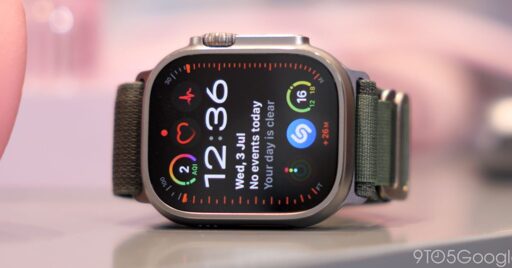
Honest question, does anyone actually think a user serviceable smart watch is a good idea?
…yes? I do. For… what I would have thought, up until a few seconds ago, were overwhelmingly obvious reasons including, but not limited to: reducing our dependence on major corporations whose only concern is maximising profit, respecting human dignity, reducing the amount of our ever-diminishing natural resources being squandered, saving a bit of money…
This is a gadget you wear in your wrist. Corporate dependence can easily be avoided by simply not buying this.
I’m convinced, O wise one
Yes. Nowadays smart watch live only about 2 - 3 years and its mainly because the battery then doesn’t last a day or any decent amount. Imagine milions and millions of e-waste that doesn’t need to exist. I have a perfectly good Garmin watch that are almost unusable because of the battery now… after 2.5 years. Why wouldn’t we want swappable batteries? This has existed before. Even in watches. There are small smart gadgets with swappable battery. And it can give the product 2 - 3 times longer lifespan. Or maybe more.
I’m not going to disagree with you on the e-waste issue. I think every effort should be made to reduce e-waste, and smart watches are definitely e-waste.
I’m saying the uncomfortable truth is that smart watches currently have the following constraint. User-replaceable battery, acceptable size and water resistance, smart watch features; you can pick two. I’m not saying that’s okay, I’m saying that’s physics.
Proof that quartz watches cannot reasonably do it has no bearing on if smart watches can. Quartz watches don’t have a screen, they don’y have smart watch features (radios, etc). A battery in a quartz watch is a fraction of the power capacity of that in a smart watch. Hell, the entire movement of a quartz watch is smaller than just the battery in a smart watch. You cannot compare the two.
You can make the argument that smart watches should have user replaceable batteries. I agree they should. You can think that we can accomplish all three things I mentioned above now, and while I think that’s a nice goal, I don’t think we are there yet.
Proof that user replaceable is not currently feasible? The batteries in the Apple Watch aren’t even Apple replaceable; if you get a battery “replacement”, they send you a new watch. One would hope Apple recycles the old watches in a responsible manner.
I agree with what you say in all but the last paragraph. Apple is no proof. The reason why they replace the whole watch is because its cheaper to do that rather than pay a technician to do the swap. We have all technologies needed to make it work, but its currently cheaper not to. If there is a legislation, suddenly the companies will be forced to make the battery swaps cheaper. Without it, there is no incentive for company like Apple, products of which people will keep buying no matter what.
How is that physics?
LG G Watch R had all three. I doubt LG can bend the laws of physics.
Quick side question, would you go swimming with your phone in your pocket? Your answer (and mine) is probably not, right?
The LG G Watch R had a rating of IP67, which is less waterproof than current phones. That is to say, no, it’s not effectively waterproof.
I did swim with my previous phone multiple times. There is no reason not to. Until my screen was cracked and I didn’t realize it until it was too late (tiny fracture). There is no reason to fear swimming with IP68 (most phones are actually rated for > than 1m) rated phones unless front or back is cracked.
Is a watch with a replaceable battery a good idea?
Yes.
I think that a user serviceable smart watch is a good idea. I want the freedom to service my devices. If a user does not feel comfortable in changing the battery they can go to the Apple Store. A user that chooses third party replacement parts has the same risk of a user buying a “third party” smartwatch. I have just replaced the battery of my Sony headphone. It was trivially easy and saved a good headphone from the junkyard. I see no reason why reducing the freedom of the consumer should be a good thing. Serviceable devices should be always the default position. It was the default in the past.
You can swim with an Apple Watch (and other such devices.) Hell, you can dive up to 100m with the Ultra. Many mechanical watches, and even some dive watches, can’t survive at that depth.
There is zero chance you can have that type of waterproofing being user serviceable.
Swatch Scuba 200, user replaceable battery, up to 200m.
Before the “yes but apple is smarter/bigger battery” whatever excuses you find, this is a solved design problem. You use gaskets instead of glue. Glue is just cheaper.
Are you comparing a quartz analog watch with a smartwatch in a thread about water resistance?
Yes and it’s completely valid to do so. The electronics of a quartz watch will fail if subjected to water just like the more complicated IC in an apple watch.
Yes, that’s true. But you have a profound misunderstanding of the size differences between a quartz watch movement and the internals of a smart watch.
The size is irrelevant, as is the complexity of the electronics/internals. Whether it is mechanical or quartz, lcd or oled, all that is relevant is the seal, either water is kept out at pressure by a seal or it is not.
In reality, the vast majority of dive watches are never used for anything deeper than a swimming pool or snorkel depth. So the pressure load on the seal is rarely anywhwre close to pressured anyway and its really not hard to replace a rubber gasket seal properly
I have an open source smart watch with a rating to 30m with a user replaceable battery. Apple is cheaping out and planned obsolescing.
I fail to understand is why you’re defending Apple with so much effort. Apple can and will absolutely comply with this if the EU makes them: they just don’t want to because they’ll lose profits. Why are you defending them?
In the '90s my $100 Casio could do the same and the battery was replaceable. Thirty years of technological advancement and now it’s suddenly impossible.
Okay, well, maybe the people who aren’t expecting their watches to work both on the Moon and at the bottom of the ocean can be allowed to swap batteries without asking a corporation for permission.
It’s not about it working on the moon, it’s an indication that you never have to worry about water.
You are all so blinded by your hatred for Apple that you can’t see that exempting this category of gadget is reasonable.
sure, there is 20 haters and only you see the truth… or maybe…
70 million Americans voted for Trump. Numbers alone don’t mean shit.
Just saying… that it might be an indicator to check if you are the blind one here. In reality the truth may be somewhere in the middle.
But why? If the people want replaceable batteries, and Apple has more than enough resources, why can’t they do it?
I’m not understanding your position. Its perfectly reasonable for gadgets to be repairable by users. Corporations should not lock this out. What’s difficult to understand?
Nah you just gotta be smart with your design and use a proper gasket. It’s not that hard, it’s just companies don’t want to do it and most users don’t prioritize repairability, unfortunately.
I’d be more comfortable exempting a Garmin on the premise that it can be used 100m than I would an Apple Watch, because they have marketed their products specific to individual sports.
Apple has marketed their watch as general, everyday use. The average person does not dive 100m everyday.
I acknowledge there is a slippery slope with my argument. And that it could lead to more electronic waste. But at it’s core, not being abused by companies, the rule should be that it has to be proven necessary for its advertised use cases. Reducing unnecessary features is a good thing towards reducing waste.